Time is a river,a violent current of events, glimpsed once and already carried past us, and another follows and is gone.”
— Marcus Aurelius, Meditations
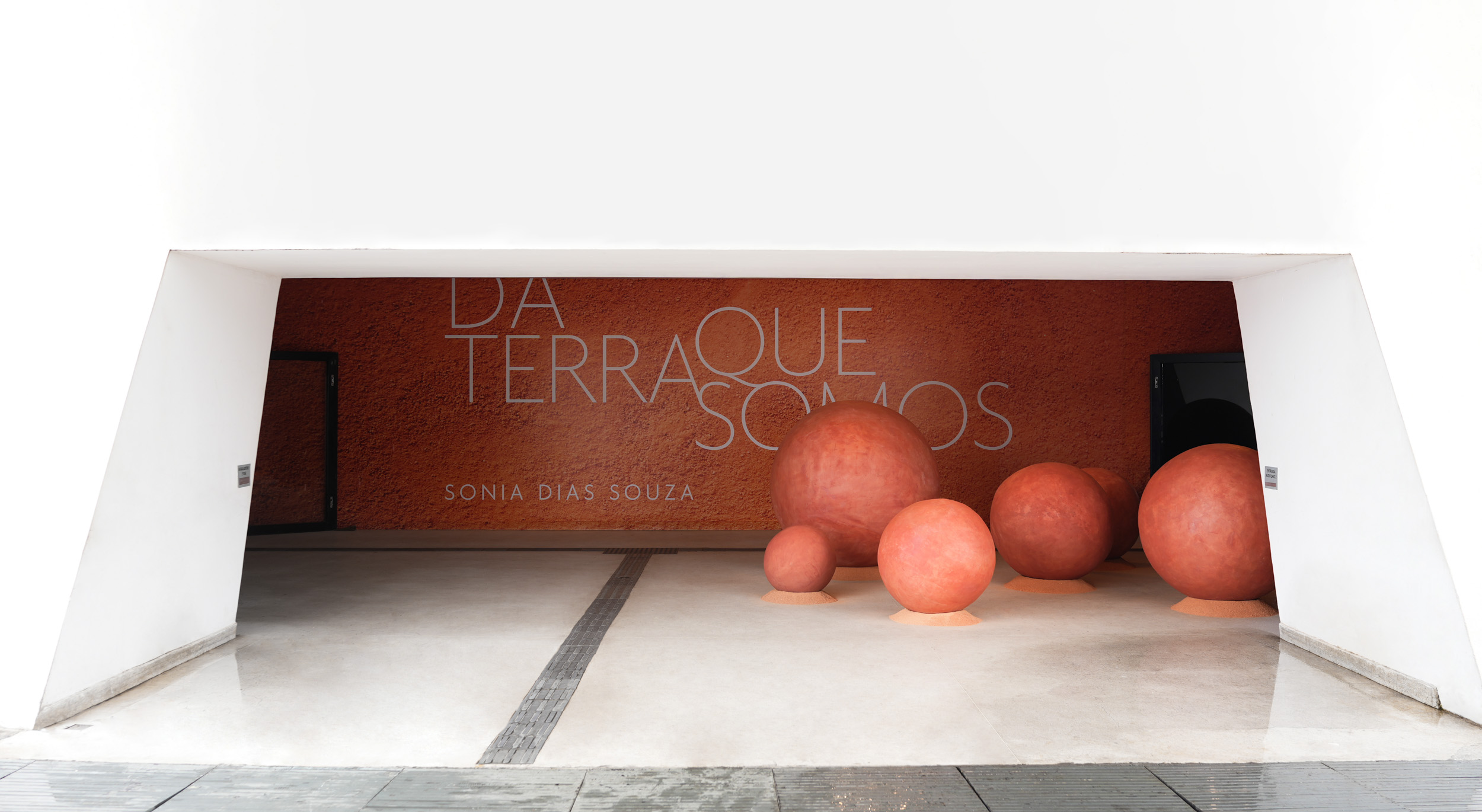
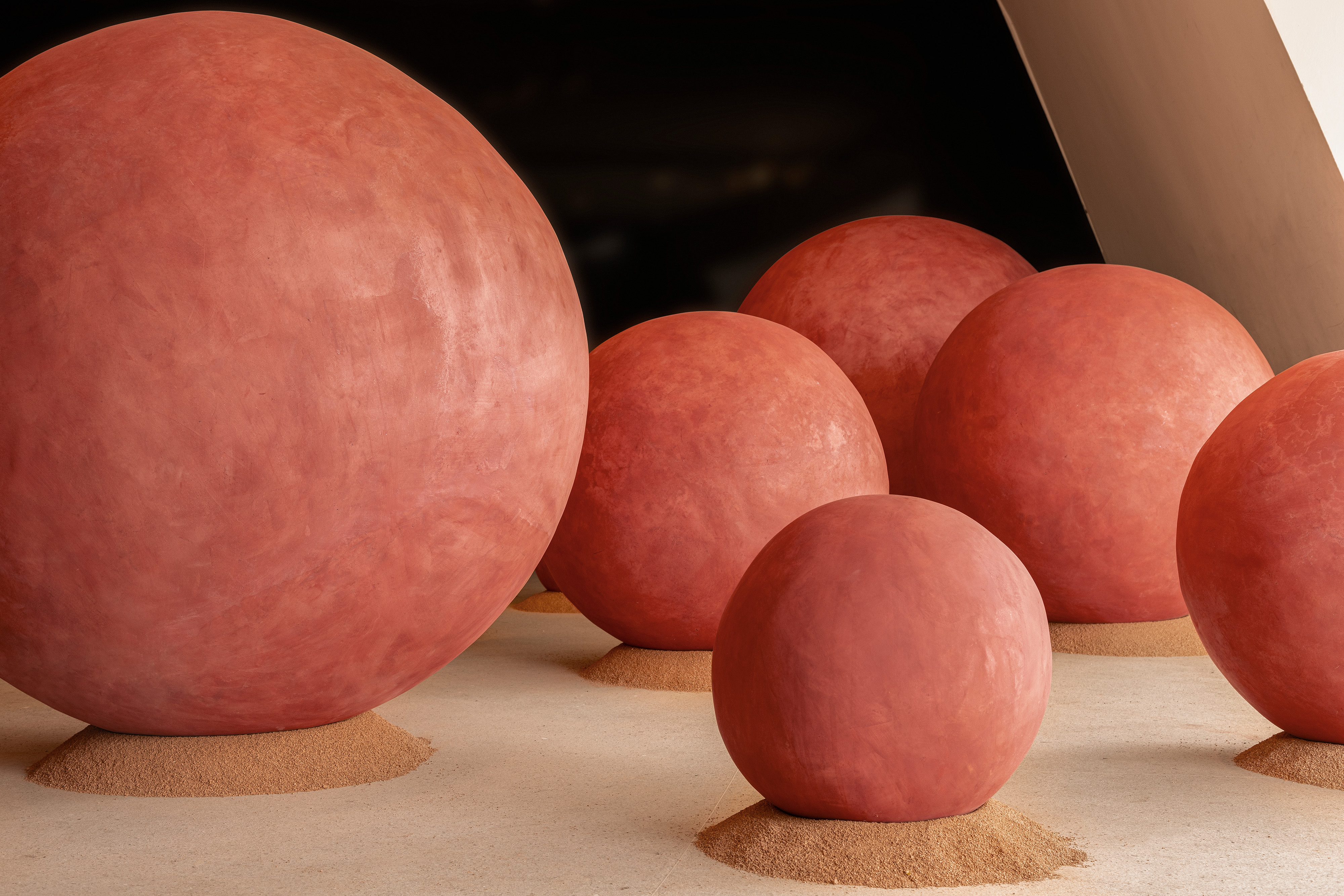
The National Museum of Brasília is yet another surprising reinterpretation by Oscar Niemeyer—a variation of the oca, the distinctive formal understanding that certain Indigenous peoples have of what constitutes shelter, long before Europeans landed on the Brazilian coast and imposed orthogonality upon the landscape. A devotee of the curve, Niemeyer rationally pursued purity without abandoning white, the halo of modern architecture. The museum’s entrance ramp rises close to the ground like an arrow, cuts through the oca, goes beyond it, and then, in a sudden twist, breaks through it once again. Beneath the ramp, in full view of those approaching the museum and in contrast with its luminous eggshell white, Sonia Dias Souza has nestled Unissonno (Unison), eight light brown spheres of varying sizes, resting on small mounds of earth, distributed in front of a wall of the same color, the base for the text Da terra que somos (Of the Earth We Are). This text gives the exhibition its title—a declaration by an artist who, since childhood, has been intrigued by the origin of life, by the energetic impulse that birthed it. Her poetics lie in the creation of “a space of pure potentiality, where nothing is definitive and everything is in a state of possibility,” much like the spheres—are they seeds? planets?—of earth in Unissonno, full of latency.
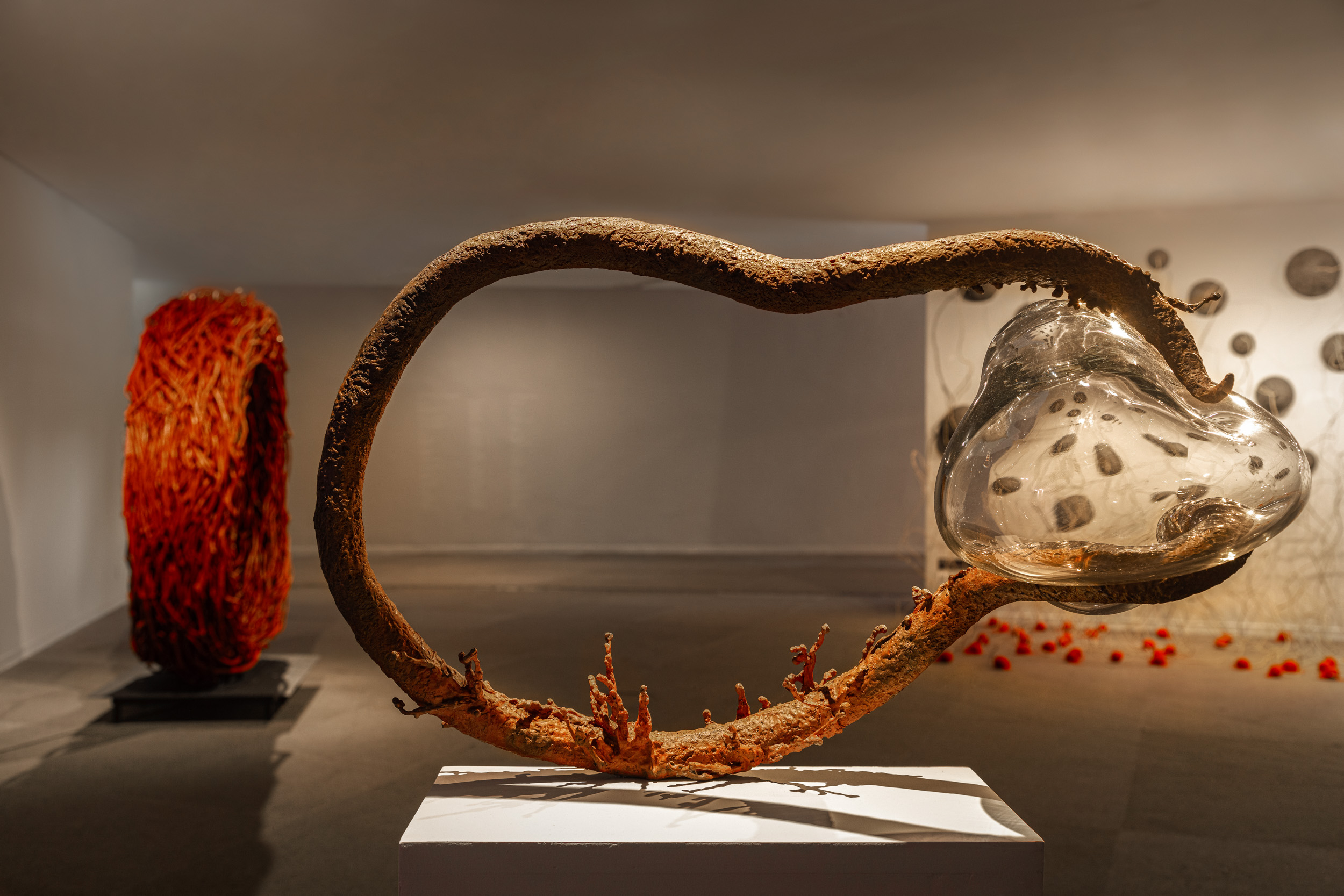
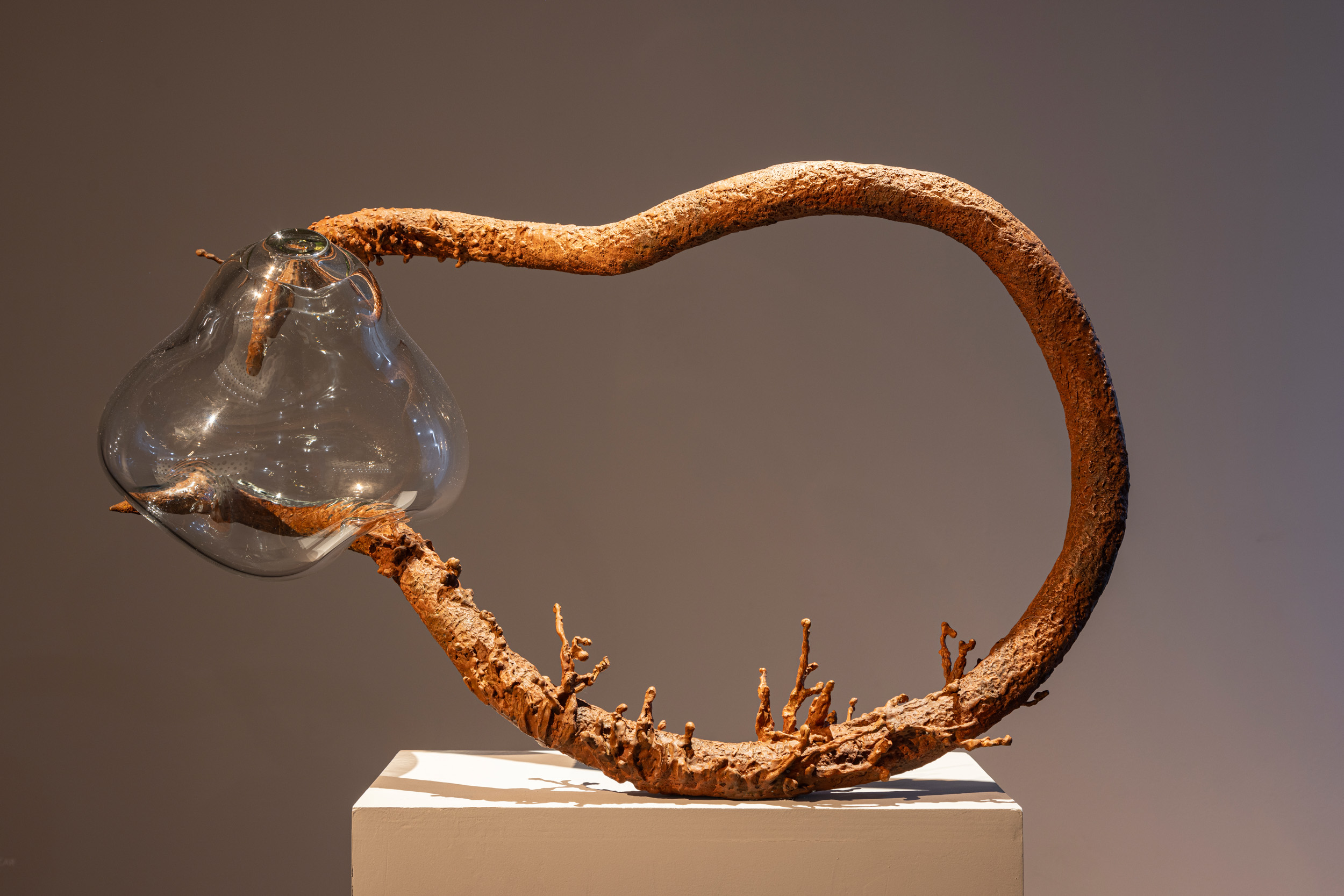
Diverse in material and form, her works relate to paintings, reliefs, sculptures, and installations—here we employ “relate” because attempting to classify them would reduce their enigmatic dimension, closing off the chain of suggested connections. Yet, they all point to the circularity between us and everything that exists, starting with the earth beneath our feet, from which vapors and liquids rise, seeds burst, roots of trunks and branches—thin and thick, stretched and truncated—are born, covered in leaves, thorns, bark, and crusts, or bare, like our complex and fragile bodies.
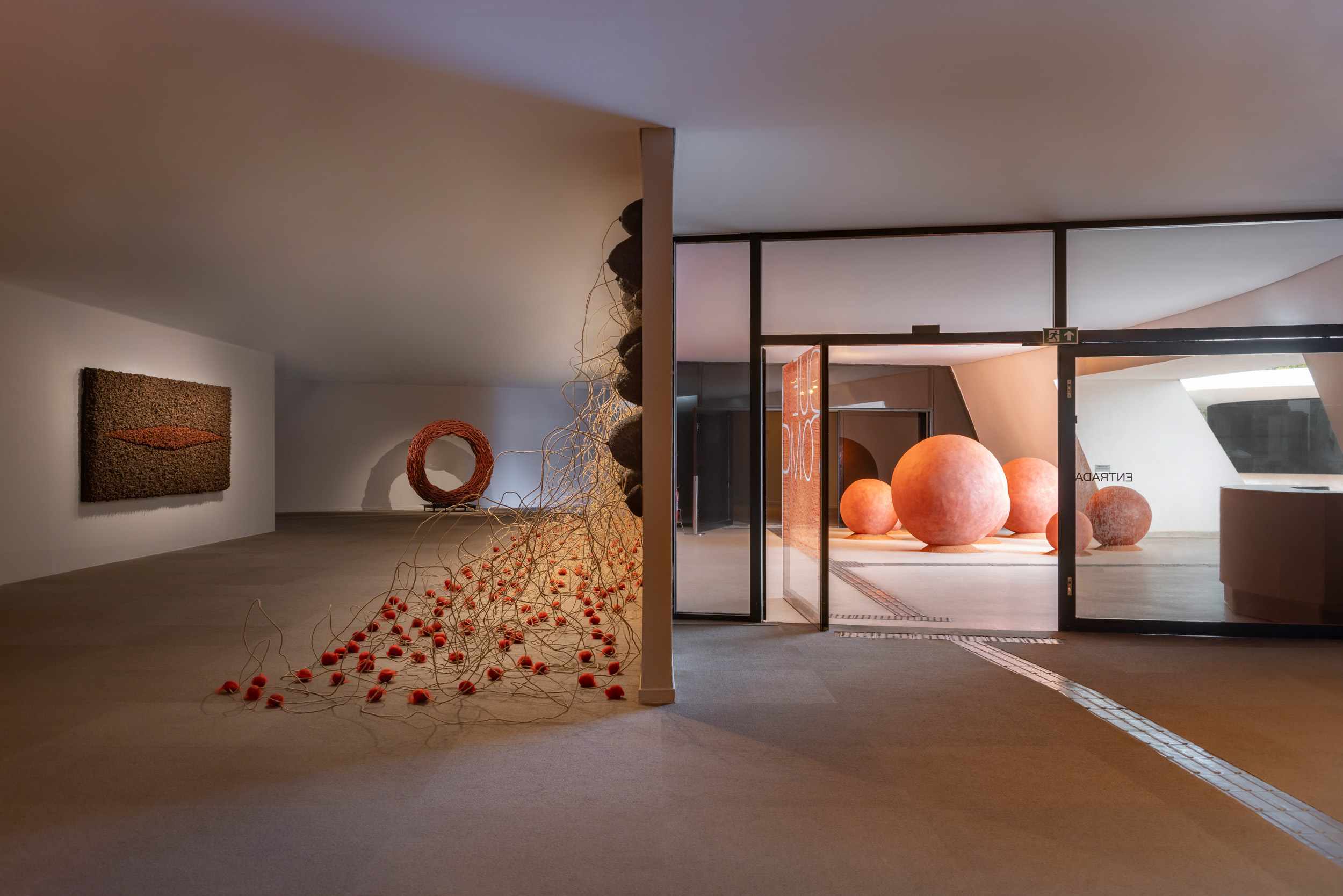
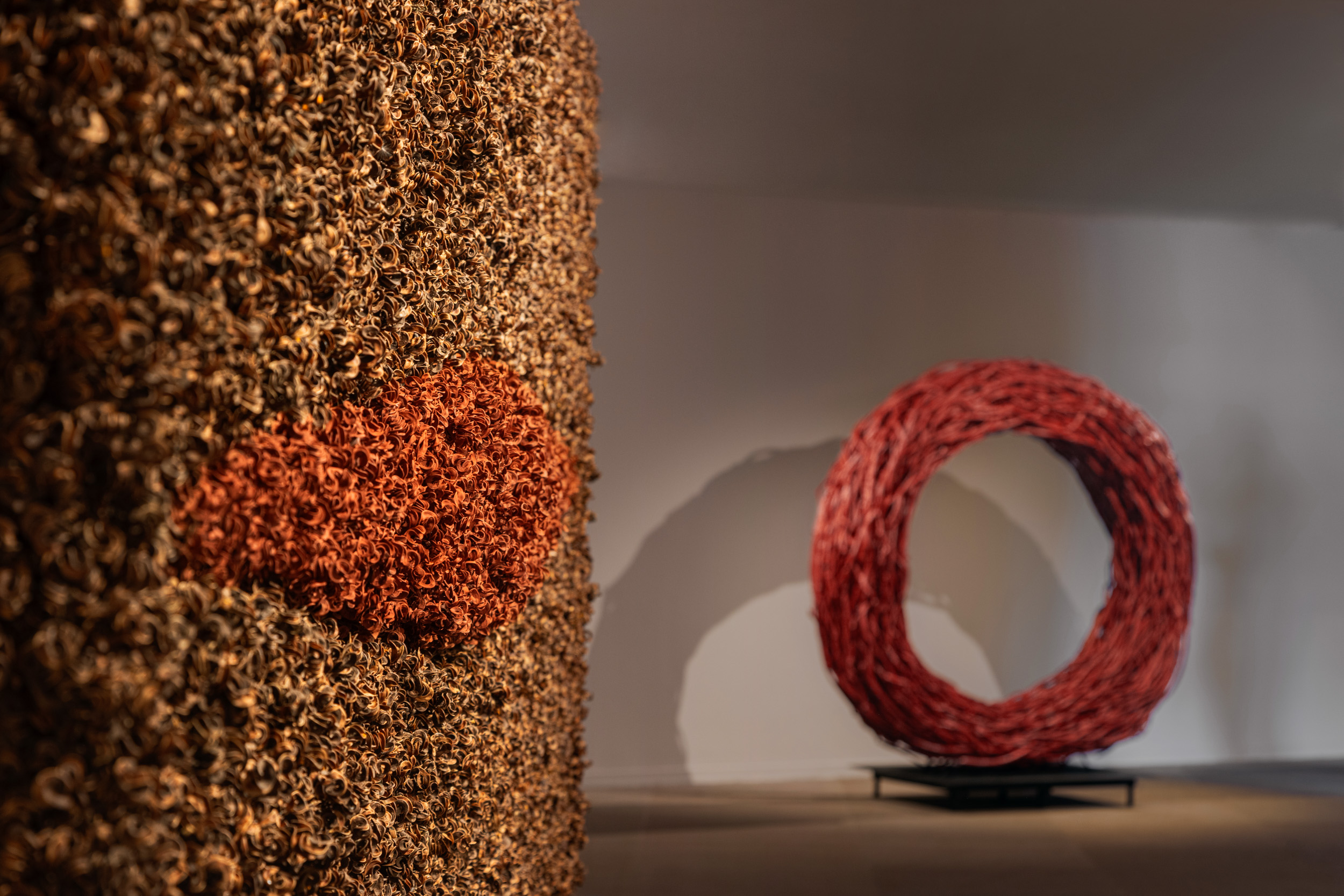
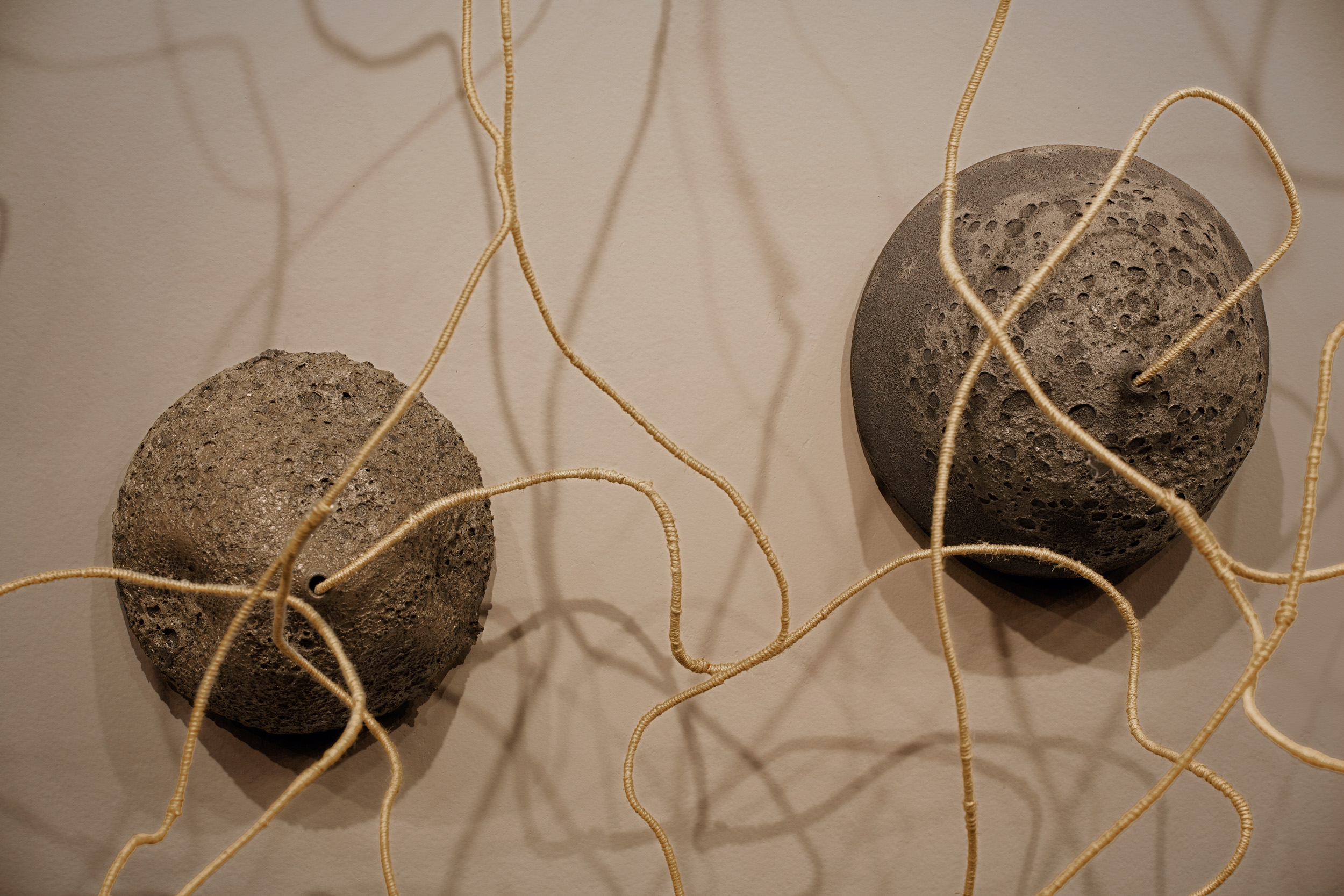
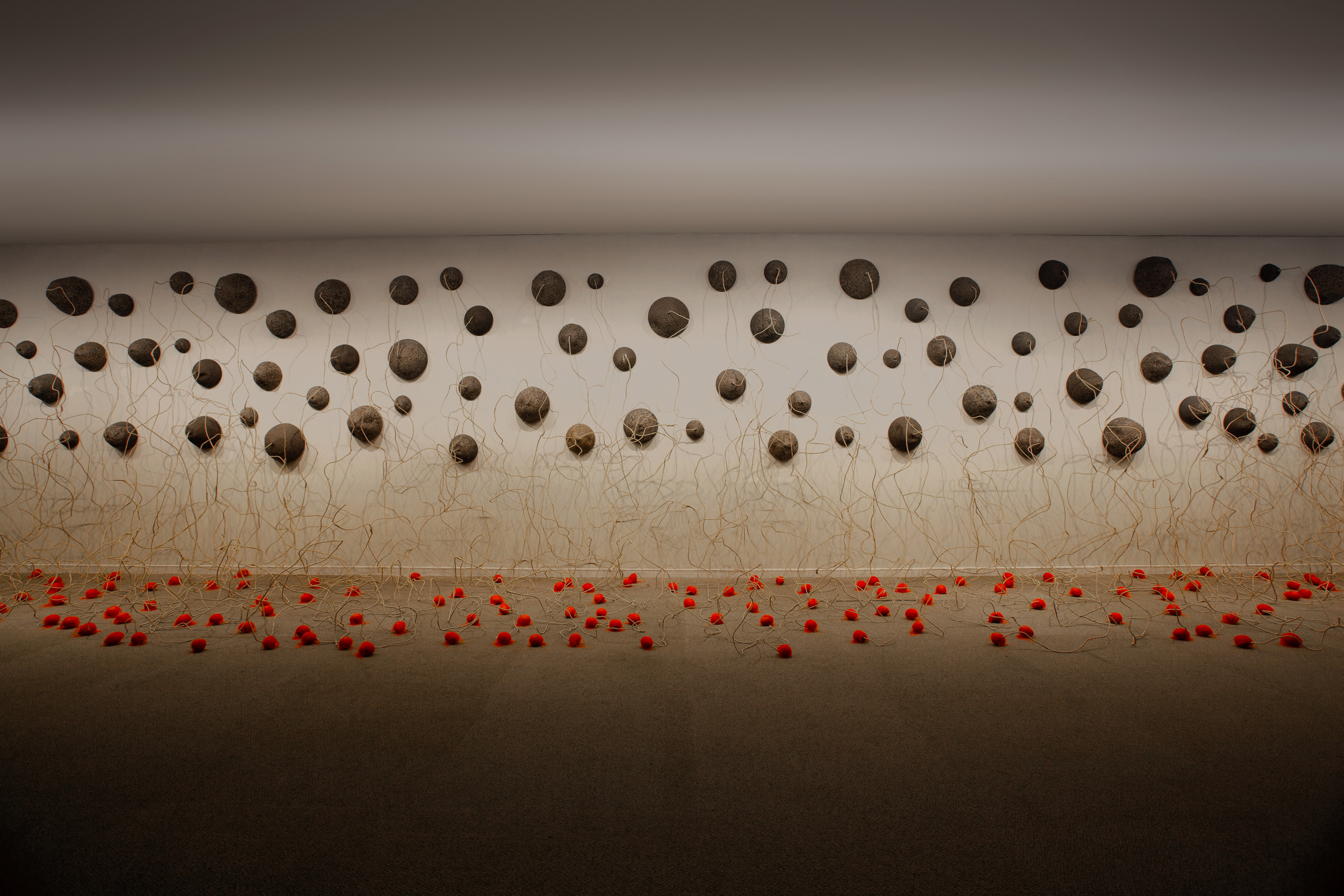
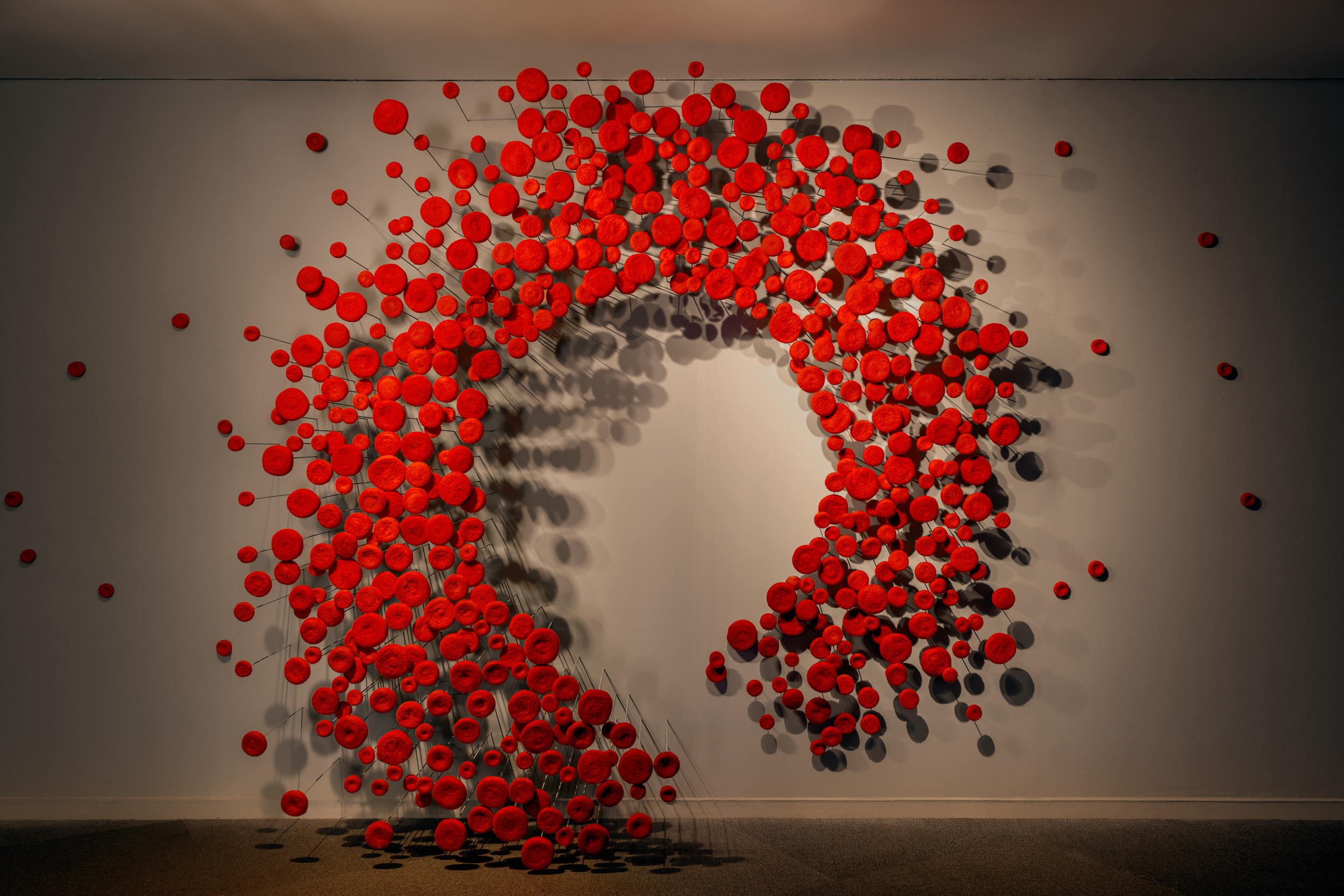
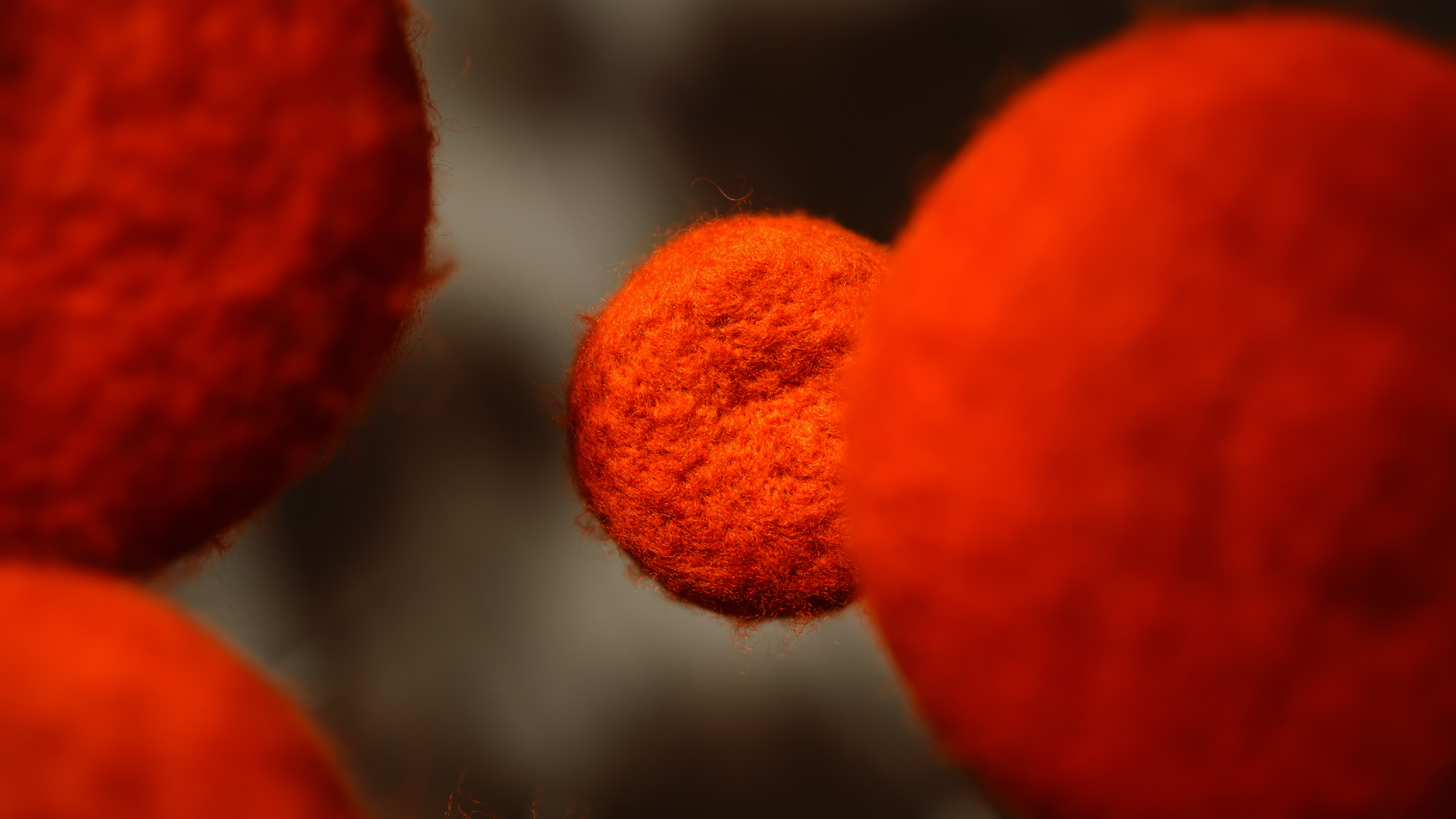
On one side of the large exhibition room, a two-meter-high vine ring painted red (Untitled). A threshold, a unit, a belt encircling an empty area—a reference to the Ensō circle of Zen Buddhist tradition—many associations are possible. Upon closer inspection, one can sense the artist’s energy exerted in stretching and braiding the fibers, the disciplined effort of someone gradually mastering organic matter, learning its ways of being, transforming into it. On the opposite wall is O sangue não tem cor (Blood Has No Color), a proliferation of metallic needles with circular tips of red felt—a representation of red blood cells scattered across the wall, forming a spiraling circle. At three meters high, it is more than enough to envelop the visitor’s body, making the blood coursing through their veins resonate throughout the space. Between the two works, the room’s large central wall is fully occupied by Magna, a collection of dozens of rough-textured breasts, large and small, made of black clay ceramics, distributed irregularly across an eighteen-meter-long wall. Spread on the floor in front of the breasts, connected to each by thick, winding cords, are “eggs” of bright red, handmade ceramic. The cords have the flexibility of lianas and vines, twisting as they reach for light. Their profusion weaves a tangled web that only amplifies the relation between breast and egg, the exchange of energy between two expressions of life’s overflow.
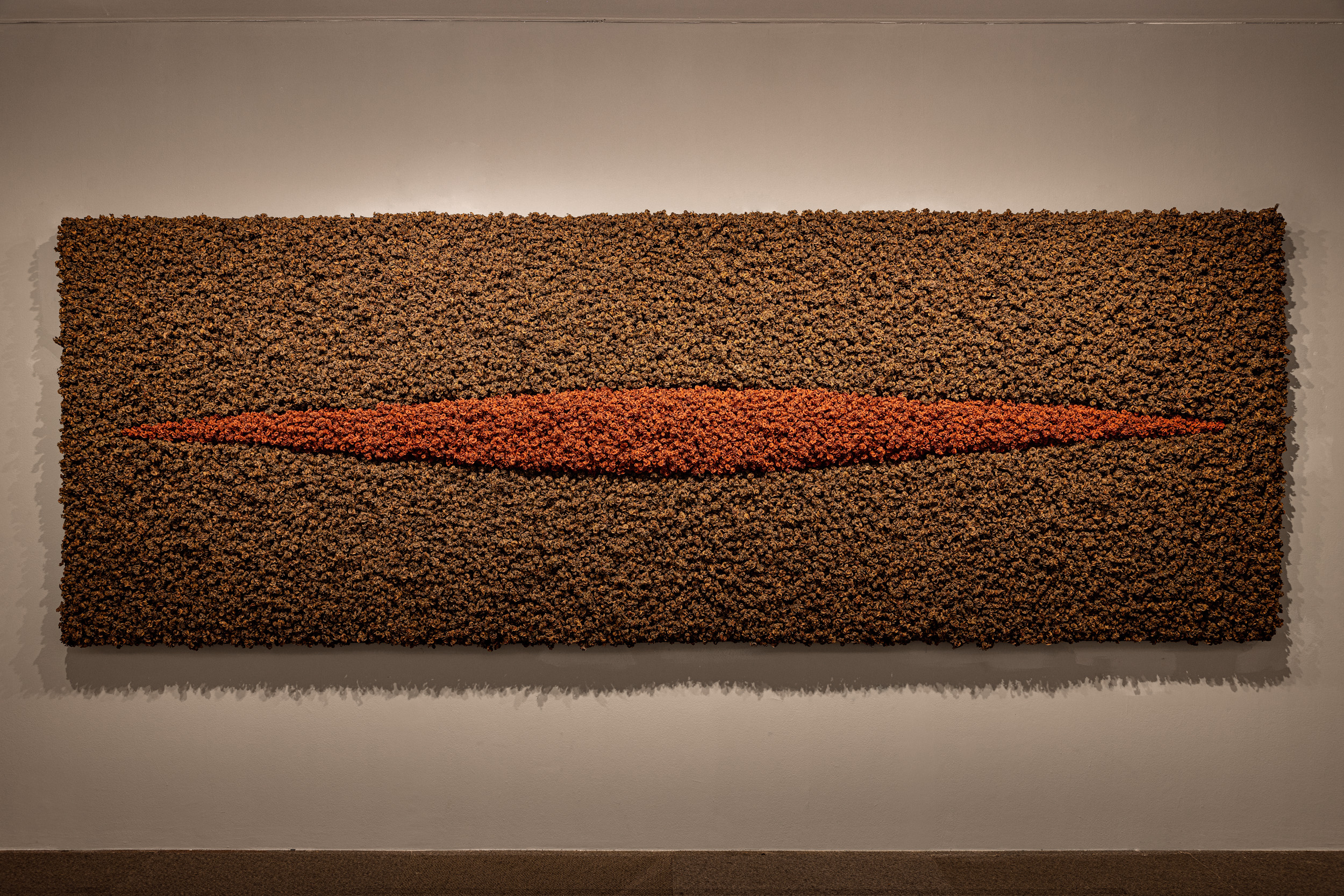
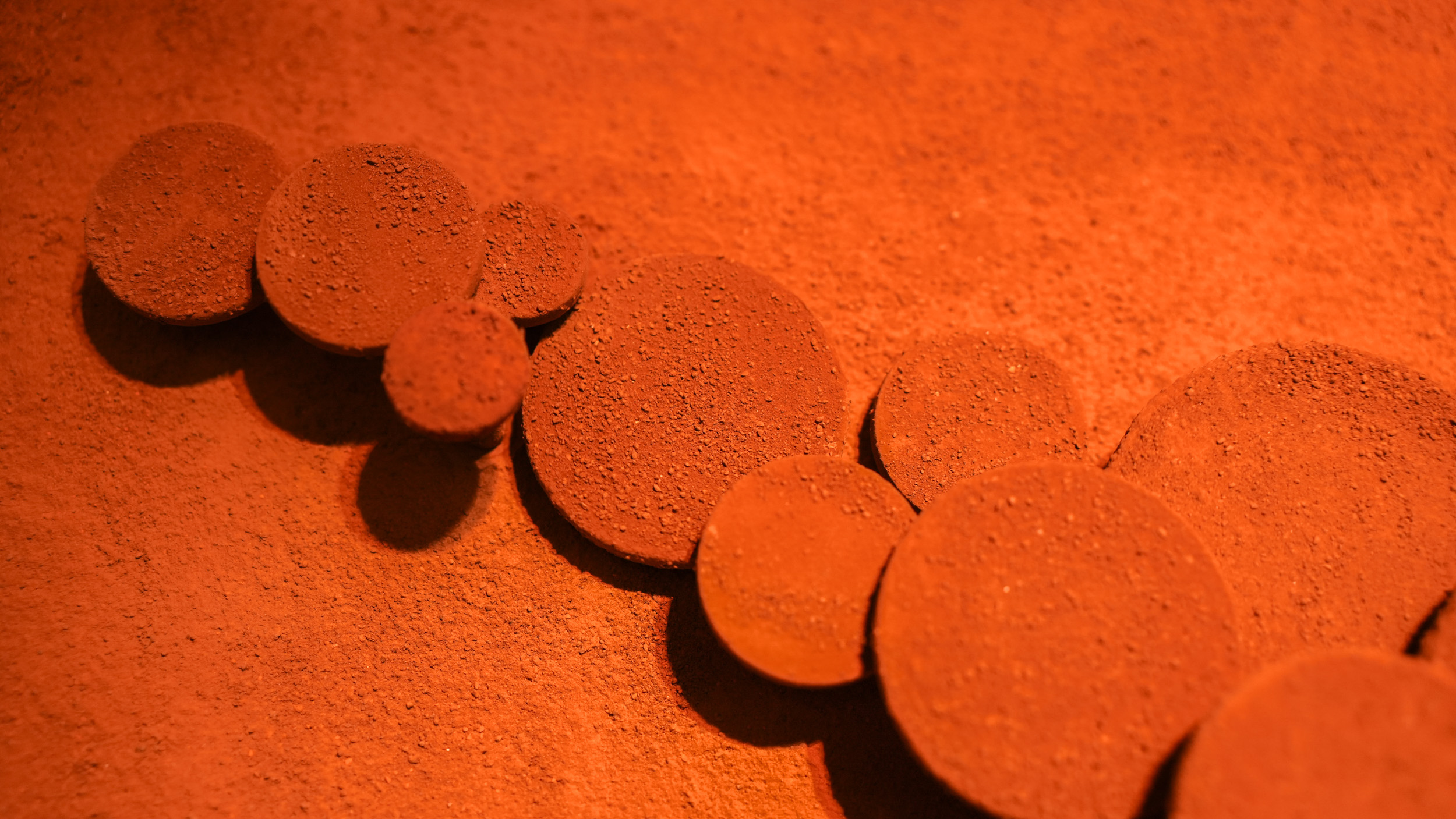
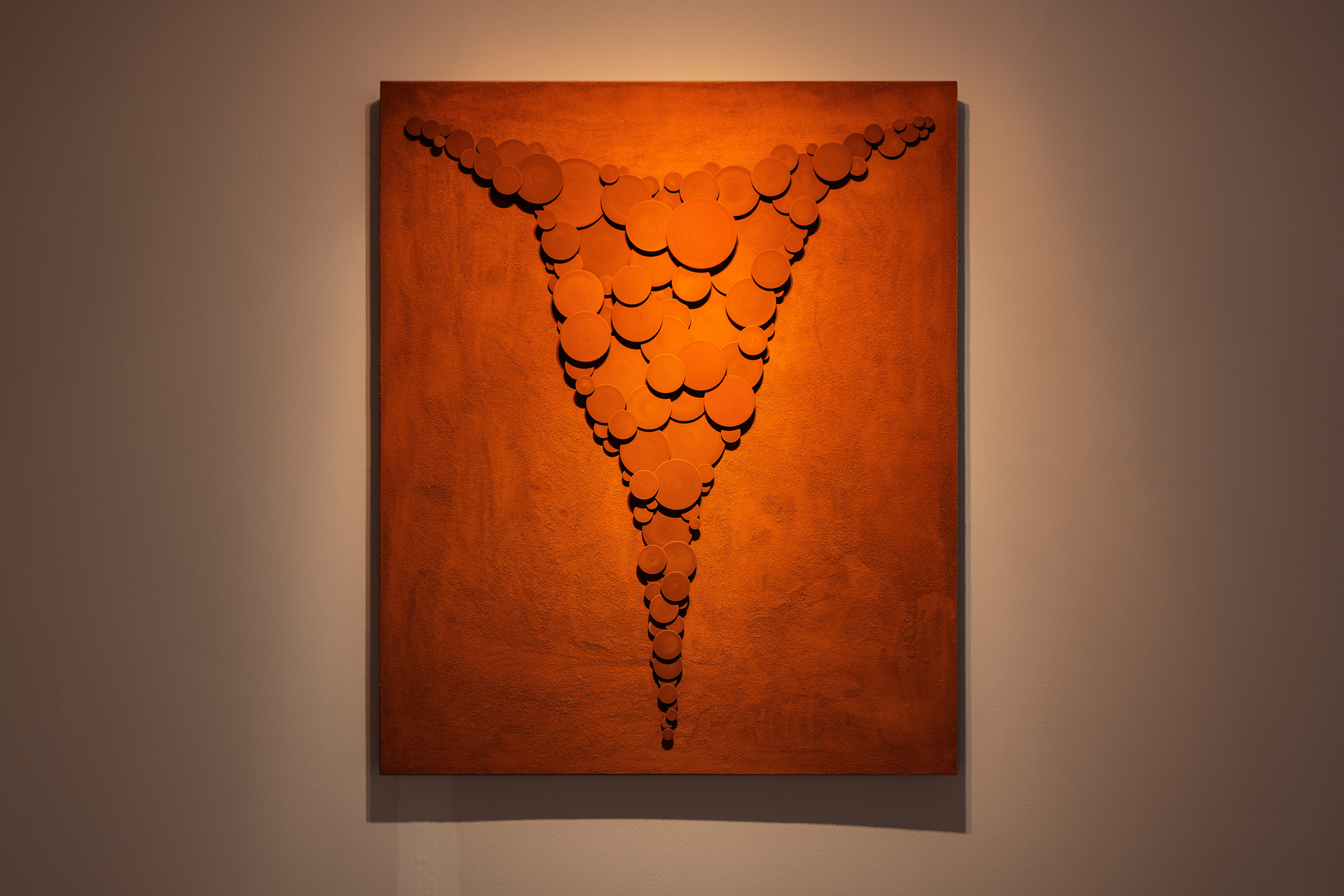
Vórtice (Vortex) is a relief in the same earthy tone as the spheres and entrance wall. An inverted triangle—an archetypal symbol of femininity and water—which evokes the image of a uterus. Fitted within a square frame, this slippery symbol is built from a proliferation of circles of varying diameters and heights, each spinning at its own rhythm.
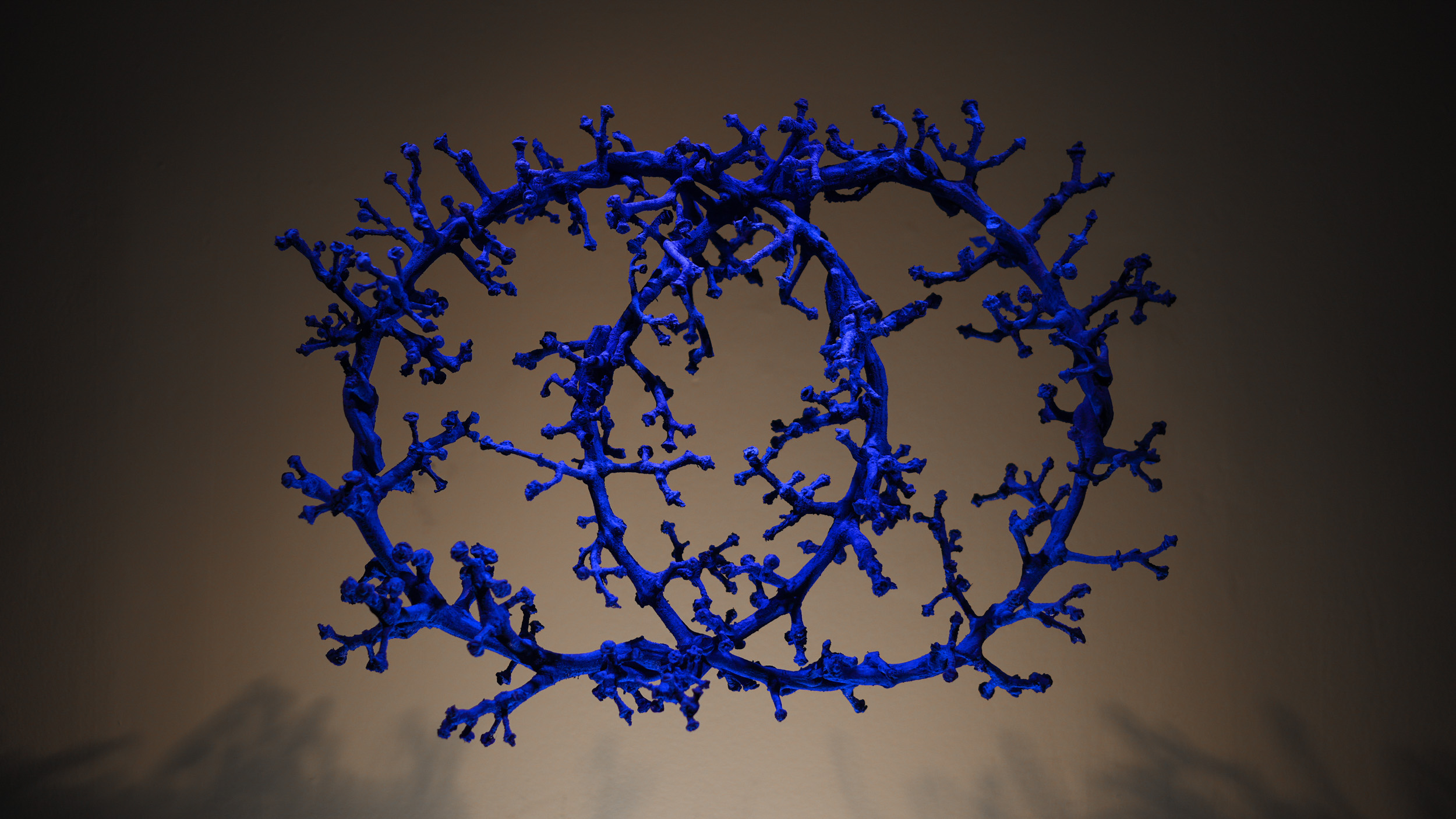
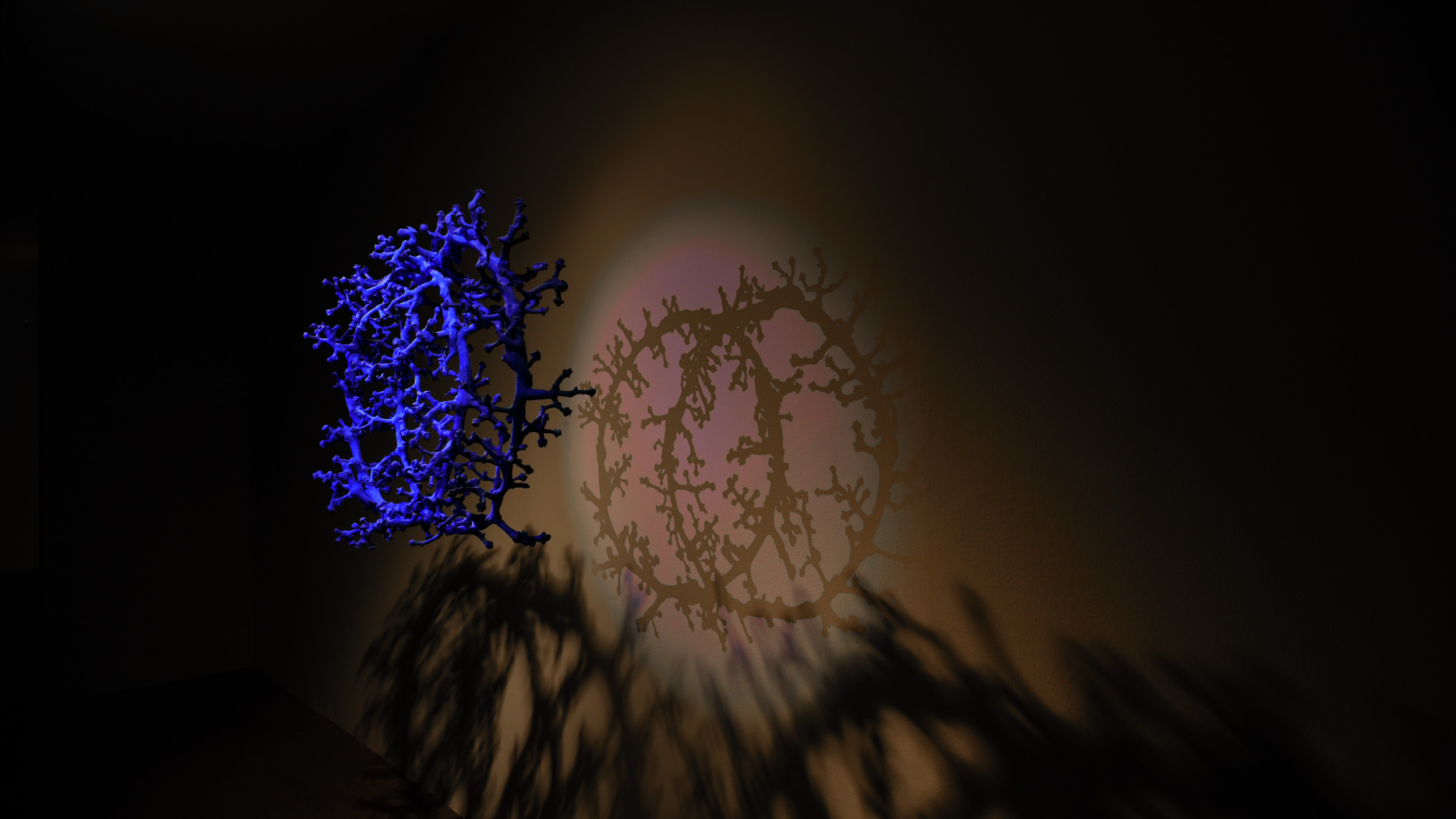
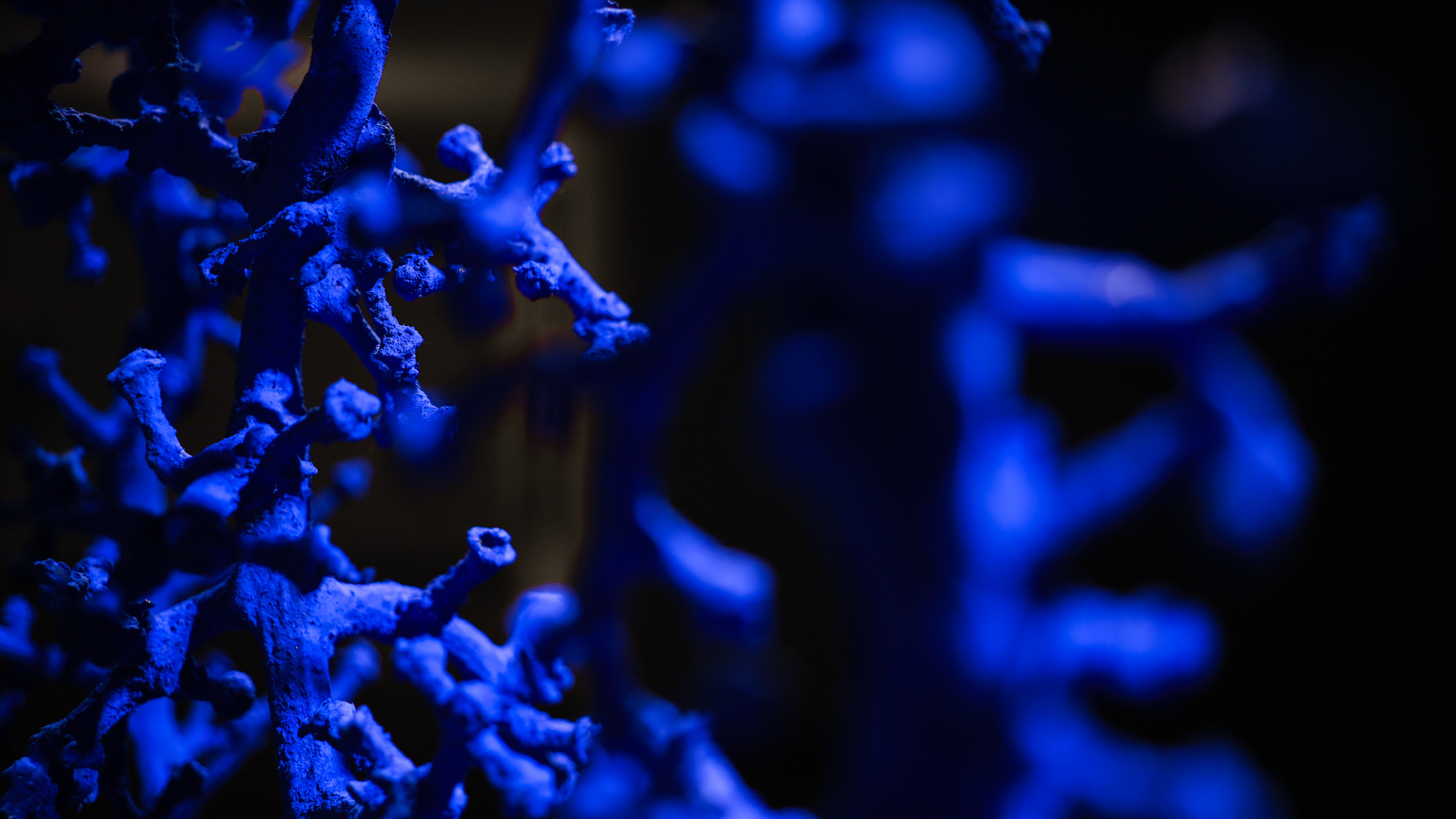
Arché, a Greek word meaning the beginning of everything that exists, is modeled on the structure of a grape cluster, alluding to the fractality of its growth—that is, its condition as an object whose structure repeats at different scales. This work reproduces yet another archetypal symbol employed by the artist: the vesica piscis, an ancient geometric form formed by the intersection of two equally sized circles, associated with a plethora of meanings, among them the symbol of feminine fertility and a portal to a higher plane. With records of its use dating back to the Neolithic period and found in various civilizations, the vesica piscis is a simple form from which regular geometric figures such as squares and triangles can be derived. For this reason, it is associated with sacred geometry—a name given to natural geometric forms and structures widely applied in art and architecture. Coated in cobalt blue, a transcendent color evocative of the deep sea and sky, capable of bringing the small closer to the immense, Arché and its two intersecting circular rings, with their irradiating edges, hang suspended, solitary, shrouded in shadows in a niche hidden from the visitor’s immediate sight—a lapse in the exhibition space, an invitation to meditate on the constant flow of life, on our fusion—we, tiny, with the universe.
Agnaldo Farias